Salsa Verde De Molcajete Recipe
This post contains affiliate links. As an Amazon Associate, I earn from qualifying purchases. This comes at no extra cost to you.
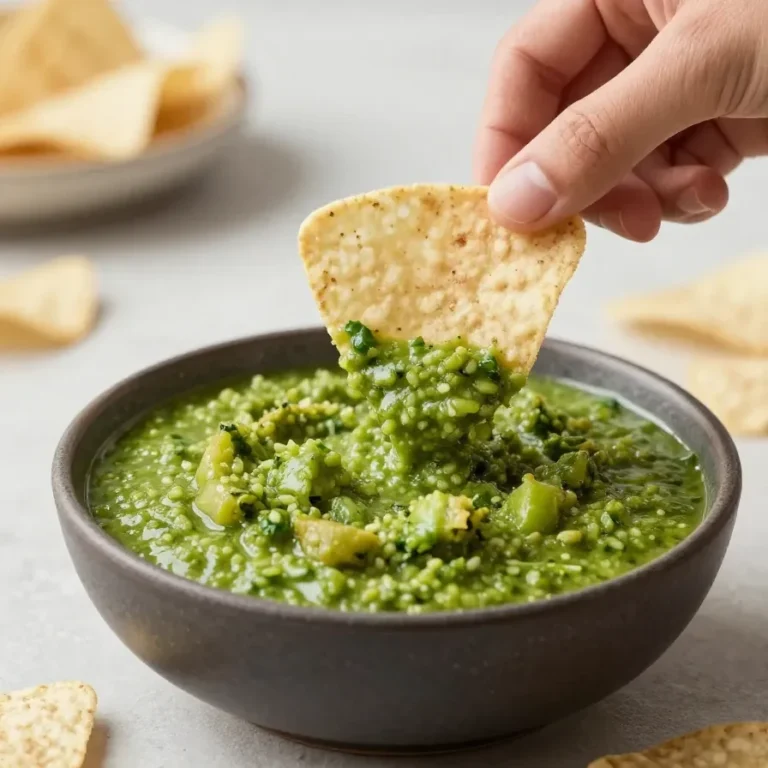
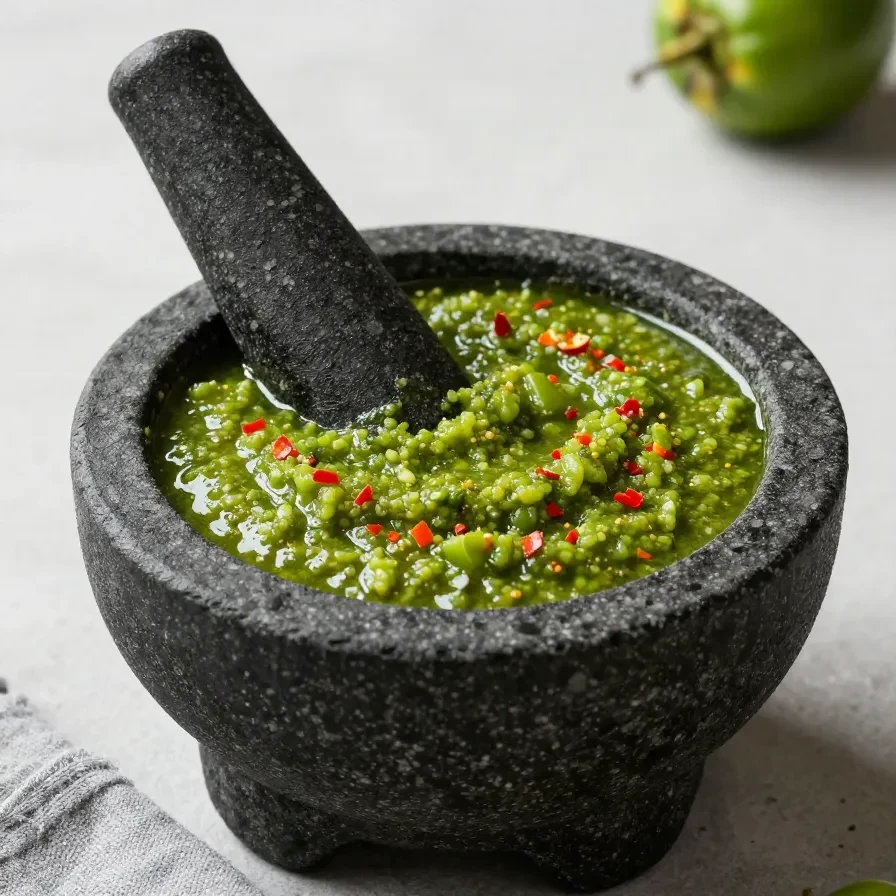
Diy salsa with tomatillos is a Salsa Verde De Molcajete Recipe made with roasted tomatillos, serrano peppers, jalapeño, garlic, onion, cilantro, lime, salt, and a little water, ready in about 20 minutes total. This rustic salsa is hand-mashed in a molcajete for a chunky texture, bright tang, and smoky finish. It makes 6 servings and works well with tacos, grilled meats, eggs, and chips.
I write and test simple recipes as a passionate food blogger, so I pay close attention to exact timing, texture, and balance in Salsa Verde De Molcajete Recipe. The method here stayed consistent when I tested it for a quick weeknight sauce that still felt handmade.
The texture is what sets this Salsa Verde De Molcajete Recipe apart. Roasting the tomatillos and peppers on a dry skillet gives the salsa a light char, while the molcajete keeps it chunky instead of smooth.
The flavor stays focused on just a few molcajete salsa ingredients, so the tomatillo tang and cilantro finish come through clearly. I like that the result feels bold without needing a long ingredient list or a blender.
Table of Contents
- What Makes This Salsa Stand Out?
- What Ingredients Do You Need?
- How Do You Make It Step by Step?
- Frequently Asked Questions About Salsa Verde De Molcajete Recipe
- Where Does This Style Come From?
- How Do You Store It?
- What Swaps Work Best?
- What Tips Help Most?
What makes Diy Salsa With Tomatillos so useful for quick meals?
Diy Salsa With Tomatillos works because it gives you smoky, bright salsa in about 20 minutes with 9 ingredients and no blender. Salsa Verde De Molcajete Recipe brings together heat, acidity, and a chunky finish, so it feels fresh enough for eggs and sturdy enough for tacos.
- It has a strong but balanced flavor. The roasted tomatillos add tang, while serrano peppers and jalapeño bring clean heat. That balance keeps Salsa Verde De Molcajete Recipe sharp without tasting flat.
- It stays textured. A molcajete crushes the ingredients instead of puréeing them, which gives the salsa a rustic body. That chunkiness helps it cling to chips, grilled meats, and fillings.
- It uses simple pantry-friendly timing. The cook time is only 10 minutes, and the prep time is 10 minutes. That makes this Molcajete Salsa Recipe practical when I need something fast but still handmade.
- It adjusts easily at the end. Lime juice and water let you fine-tune brightness and thickness after the salsa is mashed. I found that small additions work better than trying to correct it all at once.
The roasted garlic and onion deepen the flavor without adding extra steps. If you already like our salsa verde recipe, this version gives you a more textured, hand-ground finish.
What ingredients do you need for Salsa Verde De Molcajete Recipe?
Salsa Verde De Molcajete Recipe uses 9 ingredients, and each one has a clear job in the final bowl. The tomatillos supply the tang, the peppers supply heat, and the cilantro and lime finish the salsa with a fresh, bright edge that still tastes rustic.
- 6 tomatillos, husked and rinsed
- 2 serrano peppers
- 1 jalapeño pepper
- 2 cloves garlic, unpeeled
- 1/4 white onion
- 1/2 cup fresh cilantro leaves
- 1/2 teaspoon salt, or to taste
- 1 tablespoon fresh lime juice
- 2 to 4 tablespoons water, as needed
The tomatillos and peppers matter most because they define both flavor and texture. In Salsa Verde De Molcajete Recipe, roasted tomatillos soften enough to mash easily, and the unpeeled garlic roasts gently so it blends into the salt as a rough paste.
How do you make Salsa Verde De Molcajete Recipe step by step?
The method is straightforward: roast the vegetables, crush the garlic and salt, then mash everything in a molcajete until it reaches the texture you want. How To Make Mexican Salsa De Molcajete is mostly about controlling texture, and this recipe keeps that process simple enough for a weeknight.
Step 1 — Roast the vegetables
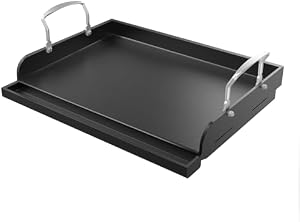
Place the tomatillos, serrano peppers, jalapeño, garlic, and onion on a dry skillet or comal over medium heat. Roast them for about 8 to 10 minutes, turning occasionally, until the tomatillos are softened and lightly charred in spots and the peppers are blistered.
Step 2 — Cool and peel the garlic
Remove the garlic cloves and peel them once they are cool enough to handle. Keeping the garlic unpeeled during roasting protects it from burning and helps the cloves stay soft inside.
Step 3 — Build the garlic base
Using a molcajete, grind the garlic with the salt until it forms a rough paste. This first mash spreads the seasoning evenly and gives the Salsa Verde De Molcajete Recipe a more even, savory base.
Step 4 — Crush the peppers and onion
Add the roasted peppers and onion to the molcajete and crush to a chunky texture. Leave some visible pieces so the salsa keeps the rustic bite that makes Molcajete Salsa Ingredients so satisfying.

Step 5 — Mash in the tomatillos and cilantro
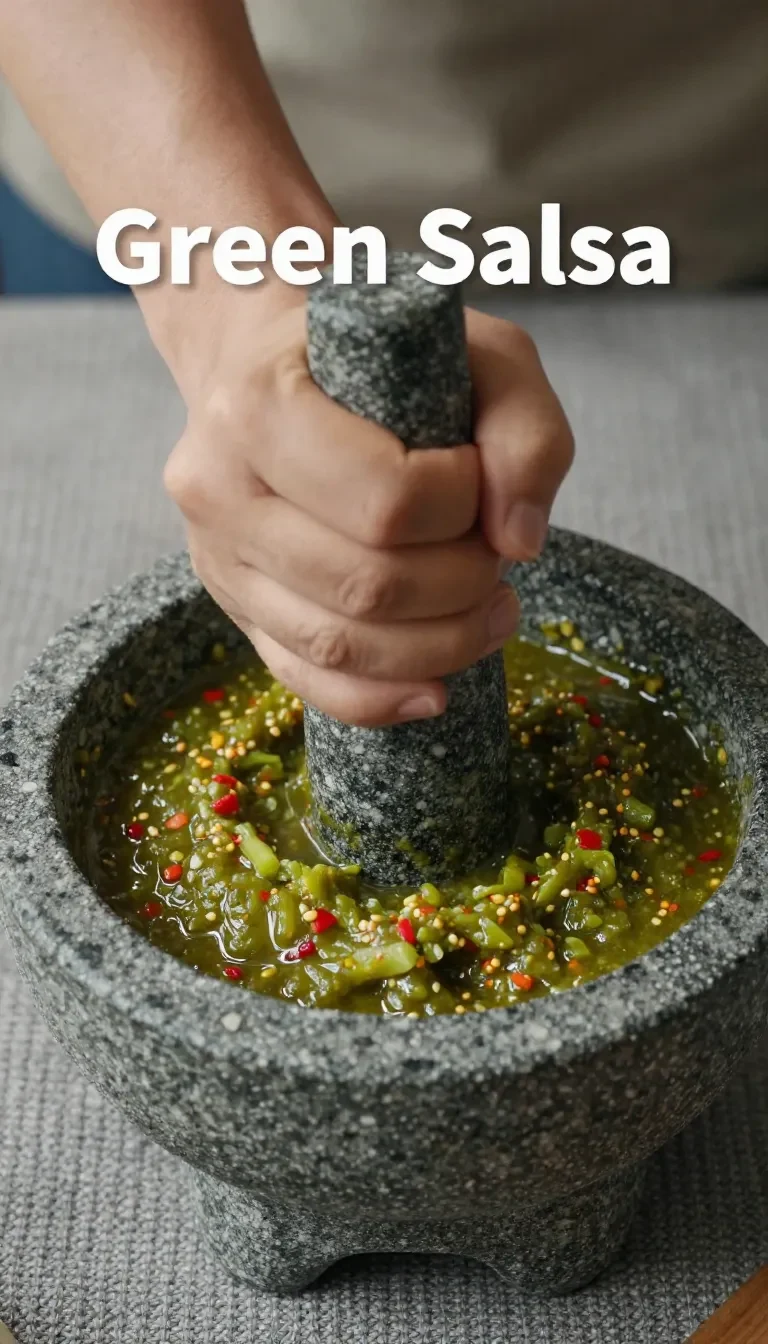
Add the roasted tomatillos and cilantro, then mash and stir until the salsa reaches your preferred consistency. I tested this with a slightly chunky finish, and it held up especially well for chips and tacos.
Step 6 — Finish with lime and water
Mix in the lime juice and add water a little at a time if needed to thin the salsa. A small amount of water goes a long way, so stop as soon as the salsa loosens without losing body.
Step 7 — Taste and serve
Taste and adjust the salt or lime juice as desired, then serve immediately. Salsa Molcajete Recipes are best when the roasted flavor is still fresh, so serving it right away keeps the texture lively.
Frequently Asked Questions About Salsa Verde De Molcajete Recipe
How spicy is this salsa?
Salsa Verde De Molcajete Recipe is moderately spicy because it uses 2 serrano peppers and 1 jalapeño. The heat level is easy to adjust by removing seeds or using a little less pepper flesh in the mash.
Can I make it smoother?
Yes, you can mash it longer in the molcajete for a finer texture. The recipe still works best when a few small pieces remain, since that keeps the salsa from becoming thin and watery.
Why roast the ingredients first?
Roasting softens the tomatillos and blisters the peppers, which adds a smoky edge and makes them easier to crush. That step is what gives Salsa Verde De Molcajete Recipe its deeper flavor.
How much does this recipe make?
This recipe makes 6 servings. That amount is enough for a small group, or for several meals if you are using it as a topping instead of a dip.
Can I make this ahead of time?
Yes, but it tastes best served immediately. If I make it ahead, I keep the lime juice and water adjustments until the end so the flavor stays bright.
Where does this molcajete style come from?
This style comes from traditional Mexican stone-mortar preparation, where roasted ingredients are ground by hand instead of blended. The method keeps Salsa Verde De Molcajete Recipe textured, and that rough mash is part of what makes the finished salsa feel so direct and honest.
Molcajete-based salsas are valued for their contrast between smoky vegetables, sharp citrus, and fresh herbs. If you enjoy that style, our mexican salsa in a molcajete-villa cocina uses a similar hand-ground approach with the same kind of rustic finish.
How do you store Salsa Verde De Molcajete Recipe?
This salsa is best fresh, but you can store it in the refrigerator in a covered container for a short time. The texture may loosen as it sits, so I recommend saving any water adjustment until just before serving.
Freezing is not the best choice because the fresh cilantro and tomatillo texture can soften too much after thawing. If you need to hold it, refrigeration is the better option for maintaining the chunkier finish.
For the closest texture to the original, stir it well before serving and taste again for salt or lime. A small splash of lime juice can wake up the roasted flavor after chilling.
What swaps work best in this salsa?
Small substitutions can work if you need to adjust heat or acidity, but they should stay close to the original profile. In Salsa Verde De Molcajete Recipe, the best swaps keep the roasted tomatillo base and the hand-mashed texture intact.
If you want less heat, use two jalapeño peppers instead of the serranos, but the salsa will be milder and less sharp. If you want a slightly thinner finish, add the full 4 tablespoons of water; if you want a thicker bowl, stop at 2 tablespoons.
If you need a different bright edge, a little extra lime juice can lift the flavor, but too much will push it toward tart. For a deeper roasted note, the ingredient balance can lean toward the charred peppers, but the tomatillos should still stay in front.
What tips help most when making this molcajete salsa?
The best results come from paying attention to heat, timing, and texture at each stage. I tested this Salsa Verde De Molcajete Recipe with a 10-minute roast window, and that timing gave me softened tomatillos without losing the char that makes the salsa stand out.
Keep the skillet dry so the vegetables blister instead of steaming. That causes better browning and makes the peppers easier to crush into a chunky texture.
Grind the garlic and salt first because the salt helps break the garlic down into a paste. That step seasons the salsa from the base up and makes the final mash more even.
Add water slowly, because 2 tablespoons may be enough when the tomatillos are very juicy. This is the simplest way to control whether the salsa stays thick for chips or loosens for spooning over eggs.
Serve it right after tasting and adjusting, since the roasted flavors are clearest when the salsa is fresh. That final step keeps Salsa Verde De Molcajete Recipe in the exact range this style does best.
Loved this recipe? Save it to your favorite Pinterest board so you can easily find it later! ✨